The Drought
of East Africa in 2011

Featured Posts
Recent Posts
Search By Tags
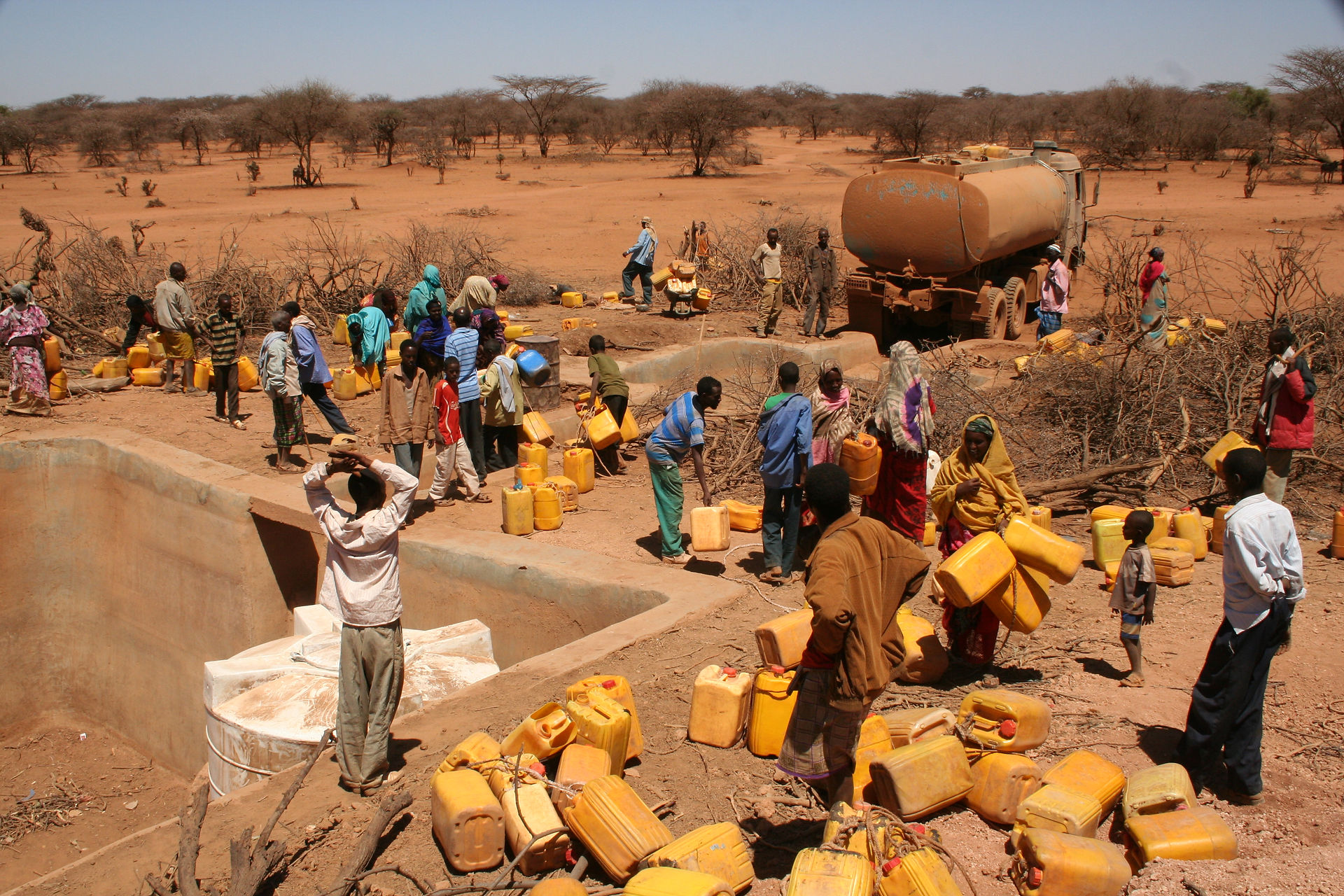
Between July 2011 and mid-2012, a severe drought affected the entire East Africa region.[7] Said to be "the worst in 60 years",[8] the drought caused a severe food crisis across Somalia, Djibouti, Ethiopia and Kenya that threatened the livelihood of 9.5 million people.[6] Many refugees from southern Somalia fled to neighboring Kenya and Ethiopia, where crowded, unsanitary conditions together with severe malnutrition led to a large number of deaths.[9] Other countries in East Africa, including Sudan, South Sudan and parts of Uganda, were also affected by a food crisis.[8][10][11][12]
According to FAO-Somalia, the food crisis in Somalia primarily affected farmers in the south rather than the northernpastoralists.[13] On 20 July, the United Nations officially declared famine in two regions in the southern part of the country (IPC Phase 5), the first time a famine had been declared in the region by the UN in nearly thirty years.[14][15]Tens of thousands of people are believed to have died in southern Somalia before famine was declared.[14]
Although fighting disrupted aid delivery in some areas, a scaling up of relief operations in mid-November had unexpectedly significantly reduced malnutrition and mortality rates in southern Somalia, prompting the UN to downgrade the humanitarian situation in the Bay, Bakool and Lower Shabele regions from famine to emergency levels.[16] According to the Lutheran World Federation, military activities in the country's southern conflict zones had also by early December 2011 greatly reduced the movement of migrants.[17] By February 2012, several thousand people had also begun returning to their homes and farms.[18] In addition, humanitarian access to rebel-controlled areas had improved and rainfall had surpassed expectations, improving the prospects of a good harvest in early 2012.[16]
By January 2012, the food crisis in southern Somalia was no longer at emergency levels according to the International Committee of the Red Cross (ICRC).[19] Although security restrictions precluded the collection of updated information in December/January for a few regions in southern Somalia, the UN indicated in February 2012 that indirect data from health and relief centers pointed to improved general conditions from August 2011. The UN also announced that the famine in southern Somalia was over.[20] However, FEWS NET indicated that Emergency (IPC Phase 4) levels of food insecurity persisted through March in the southern riverine parts of the Juba and Gedo regions, the south-central agropastoral zones of Hiran and Middle Shebele, the southeast pastoral sections of Shebele and Juba, and the north-central Coastal Deeh on account of crop flooding and ongoing military operations in these areas, which restricted humanitarian access, trade and movement.[21] The UN also warned that, in a worst-case scenario of poor rains and price instability, conditions would remain at crisis level for about 31% of the population in limited-access areas until the August harvest season. In the most-likely scenario, the FSNAU and FEWS NET expected the April–June rains to be average. Ameliorated food security outcomes were also expected on account of the start of the Deyr harvest, which reached 200% of the post-war mean and was predicted to be significantly higher than usual. With the exception of some coastal areas, the abundant rainfall in most parts of central and northern Somalia replenished pastureland and also further boosted the purchasing power of local herders. With the benefit of the current harvest expected to ebb in May, the UN stressed that continued multi-sectoral response was necessary to secure the gains made,[22][20] and that general humanitarian needs requiring international assistance would persist until at least September 2012.[23]
Aid agencies subsequently shifted their emphasis to recovery efforts, including digging irrigation canals and distributing plant seeds.[20] Long-term strategies by national governments in conjunction with development agencies were said to offer the most sustainable results.[24]
The 2011 East Africa Drought
